Anxiety to Calm
Stop overthinking, quiet your mind, and feel in control again.
For People Struggling With Anxiety
Evidence based
results driven
easily accessible
Personalised support
Practical stratergies
Goal-orientated sessions
STILL NOT SURE?
Frequently Asked Questions
Here's what we usually get asked
Can therapy really help with anxiety?
Yes. Anxiety is highly treatable. Together we'll identify what's driving your anxiety, understand why it keeps happening, and use practical, evidence-based strategies to help you feel calmer, think more clearly, and regain control. The aim isn't just to cope with anxiety, but to reduce its impact on your daily life.
What types of anxiety do you help with?
Support is available for a range of anxiety concerns, including:
- Generalised anxiety and excessive worry
- Overthinking and racing thoughts
- Panic attacks
- Social anxiety
- Health anxiety
- Work-related stress and burnout
- Anxiety following difficult or traumatic life experiences
- Anxiety related to chronic illness or major life changes
Do I need a diagnosis before booking?
No. Many people know they're struggling with anxiety without having a formal diagnosis. During your first session we'll explore your symptoms, understand what's contributing to them, and develop a treatment plan that suits your situation.
How many sessions will I need?
This varies depending on your goals and what you are working through. Some clients benefit from short-term focused work, while others choose longer support. We can discuss what is most appropriate for you.
Many of my clients get results after 5 sessions.
Will I have to talk about my childhood?
Not necessarily. While your past can absolutely be important, therapy does not have to mean going over every detail of your life. We focus on what is most relevant to understanding and shifting the problem.
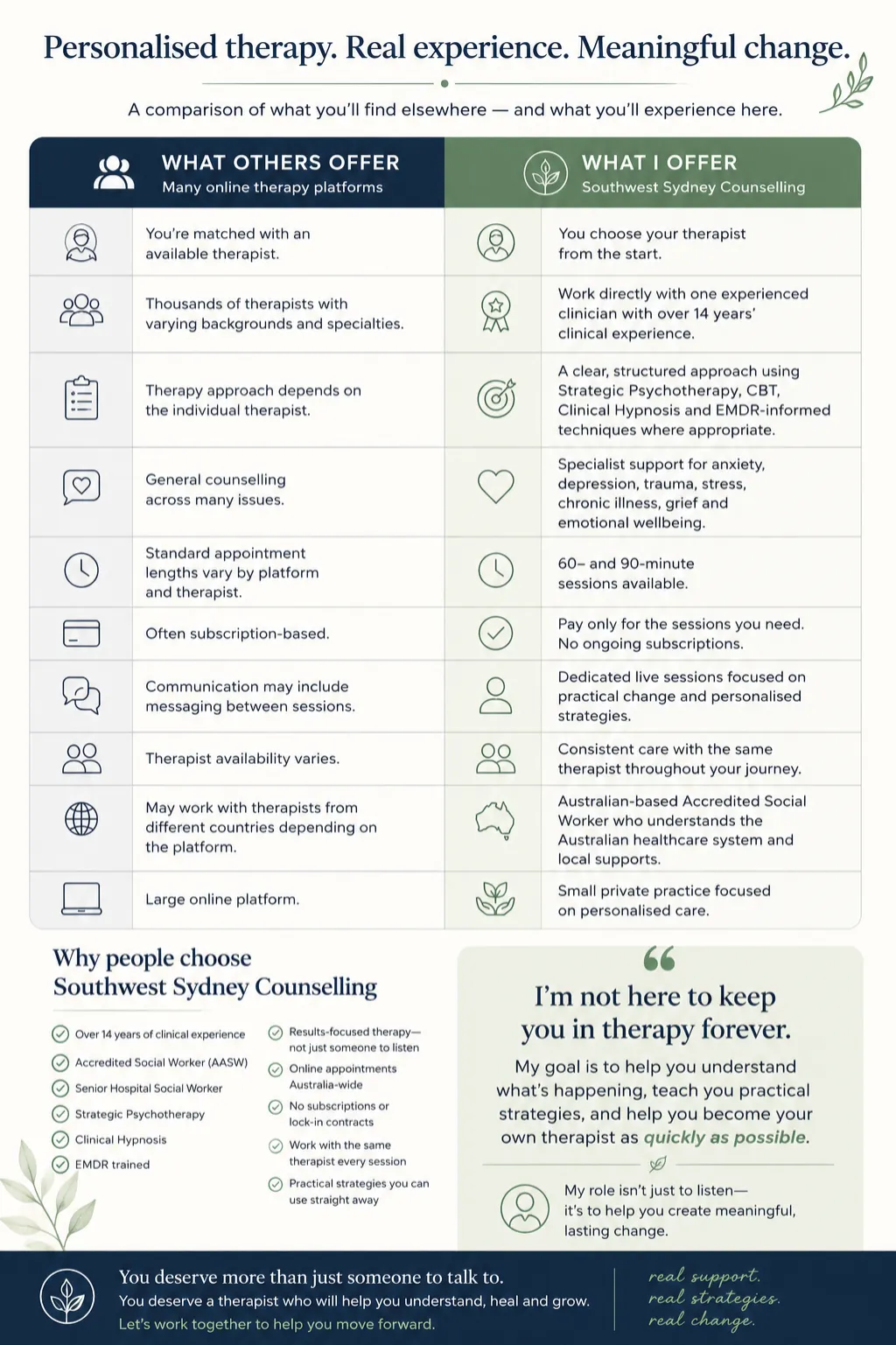
I've tried counselling before. How is this different?
My approach is structured and practical. Rather than simply talking about problems each week, we'll work to understand the patterns driving your anxiety and use targeted strategies to help you make lasting changes. You'll leave sessions with a clearer understanding of what to work on between appointments.
Is online therapy actually effective for anxiety?
Yes. Research shows that online therapy can be just as effective as face-to-face therapy for many people experiencing anxiety. It also allows you to access support from the comfort of your own home, making it easier to fit therapy into a busy life.
How We Create Real Change
Step 1: Understand the pattern
Learn how your thoughts, behaviours, emotions, and coping strategies may be keeping you stuck.
Step 2: Build new strategies
Develop practical tools and approaches using evidence-informed therapy tailored to your needs.
Step 3: Reinforce lasting change
Strengthen new ways of thinking and responding through structured sessions, reflection, and ongoing support.
MEET THE FOUNDER & CEO
Meet YourTherapist
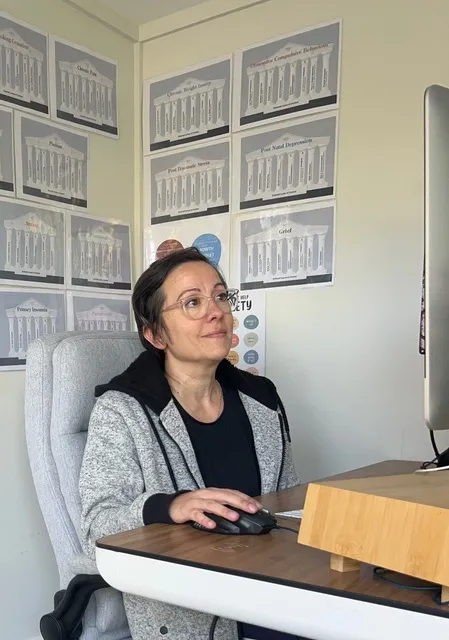
Hi, I'm Cecilia Calnan, an Accredited Social Worker, Strategic Psychotherapist, Clinical Hypnotherapist and EMDR-trained therapist with extensive experience supporting adults experiencing anxiety.
For many years I've worked with people facing overwhelming stress, constant worry, panic, trauma, chronic illness and major life changes. I've seen how anxiety can leave people feeling trapped in cycles of overthinking, fear and self-doubt.
My approach is practical, structured and focused on helping you understand why your anxiety keeps happening, not just how to cope with it.
Together we'll identify the patterns driving your anxiety and develop strategies that help you regain confidence, feel calmer and get back to living the life you want.
Bachelor of Social Work
Diploma of Clinical Hypnosis and Strategic Psychotherapy
EMDR Level 1